
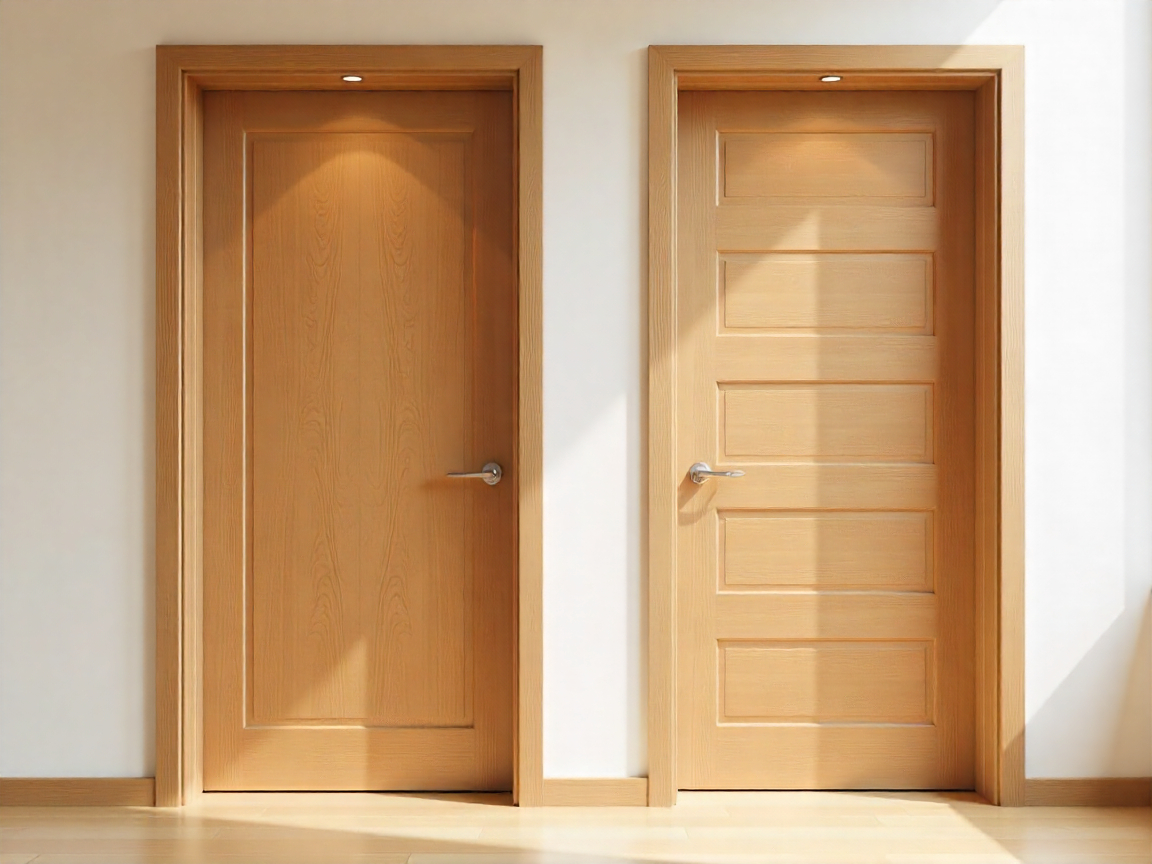
Choosing the right door finish is more than a stylistic decision. It affects durability, maintenance, and overall performance in everyday use. Two of the most popular finishes today are timber veneer doors and high-pressure laminate doors. Each offers distinct advantages and suits different project needs.
In this guide, we explore the differences between these door types, when one might be more suitable than the other, and how quality door frame services and finishing processes help deliver a seamless result.
What Are High-Pressure Laminate Doors?
High-pressure laminate doors are created by pressing multiple layers of resin-soaked kraft paper and a decorative laminate under high heat and pressure. These laminates are bonded to a solid or engineered core to produce a surface that is tough, easy to clean, and highly resistant to wear.
HPL is commonly used in commercial environments such as schools, healthcare facilities, retail spaces, and corporate offices. Its durability and wide range of finishes have also made it a popular choice in premium residential builds.
What Are Timber Veneer Doors?
Timber veneer doors consist of a real wood surface sliced from natural logs and applied over a door core, such as a solid or engineered core. Veneer brings a luxurious, warm, and authentic timber appearance to interior spaces.
Because every veneer has its own grain pattern, it can create a rich, unique look that’s highly desirable for executive spaces, boardrooms, and high-end residential interiors.
Key Differences: Veneer vs High-Pressure Laminate Doors
1. Appearance and Aesthetics
- Veneer doors offer natural variations in grain and colour, with a premium timber feel that can’t be replicated.
- High-pressure laminate doors offer consistent patterns and colours, including woodgrain looks that mimic timber while providing enhanced resilience.
2. Durability and Wear Resistance
- HPL doors are extremely scratch-resistant, stain-resistant, and easy to maintain — ideal for high-traffic or commercial settings.
- Veneer doors require more careful handling to avoid dents and scratches, making them better suited for spaces where aesthetics and warmth are prioritised over heavy use.
3. Maintenance
- High-pressure laminate doors are easy to clean with mild detergents and require minimal upkeep.
- Veneer doors may need periodic oiling or refinishing to maintain their natural appearance.
4. Cost Considerations
- HPL generally offers greater cost-efficiency with high performance and lower lifecycle maintenance.
- Veneer tends to be more expensive upfront due to the cost of real timber and bespoke matching.
5. Integration with Door Frame Services
Both finishes require precise door frame services to ensure perfect installation. Accurate cutting, hardware preparation, and CNC profiling deliver a flush, stable fit — essential for both veneer and HPL doors to perform over time.
When to Choose High-Pressure Laminate Doors
There are plenty of scenarios where high-pressure laminate doors are the ideal choice:
Commercial Environments
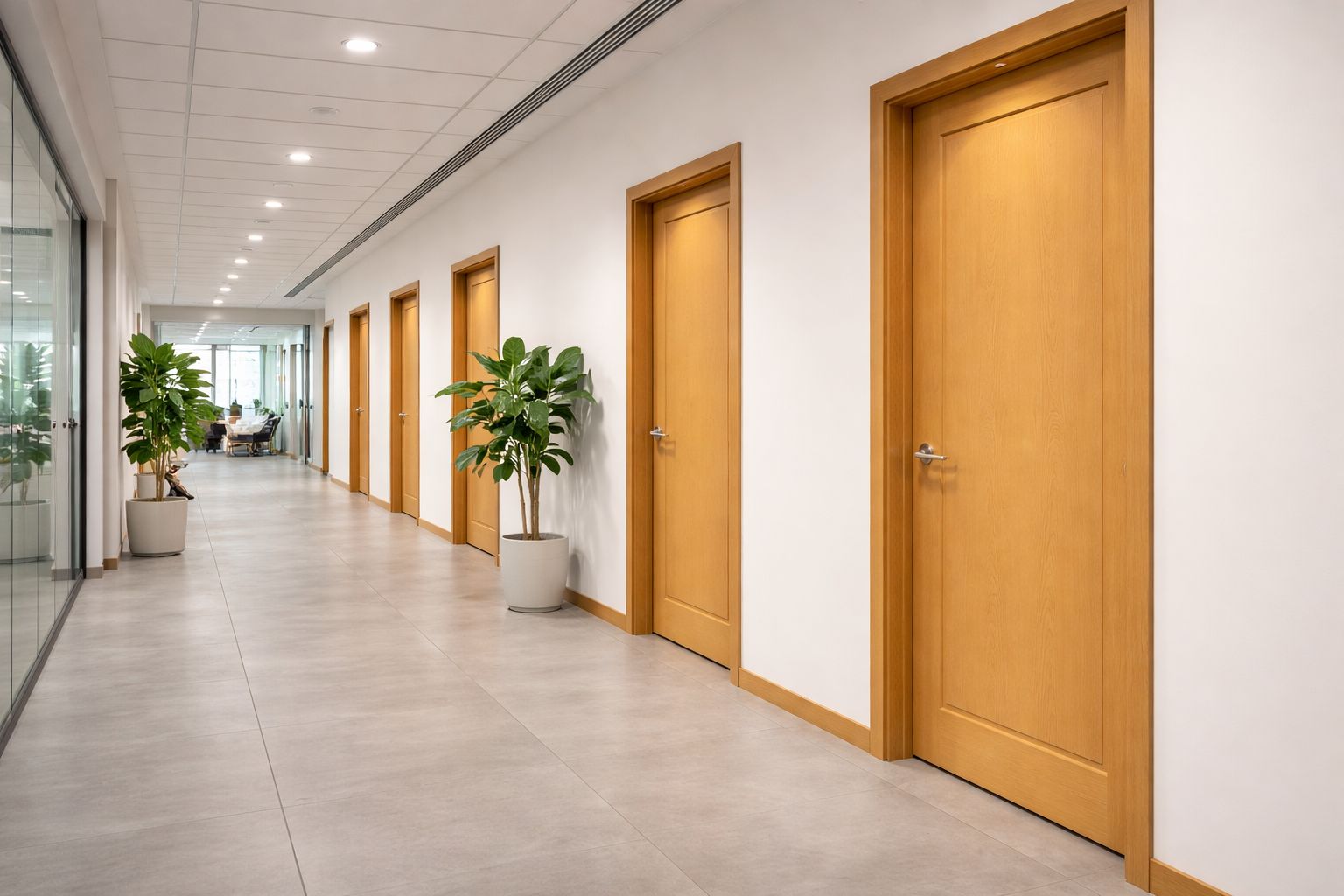
HPL is well-suited to offices, retail stores, schools, and hospitals where doors endure constant use, cleaning, and occasional knocks.
High-Traffic Areas
Corridors, staff rooms, and public spaces benefit from HPL’s resistance to marks and scuffs.
Hygiene-Sensitive Locations
Healthcare facilities and laboratories often use laminate doors because they are easier to clean and maintain than natural wood.
Design Flexibility
Laminate offers wide colour and texture options, allowing designers to match corporate branding or interior themes consistently.
When to Choose Timber Veneer Doors
Timber veneer doors shine in environments where aesthetics and natural warmth are priorities:
Executive Offices
Their premium appearance adds visual value and a sense of prestige.
High-End Residential Projects
Veneer enhances interior design with real wood grain and elegant finishes.
Feature Areas
Boardrooms, reception areas, and boutique spaces benefit from veneer’s unique natural character.
The Role of Special Finishes and Precision Installation
Whether you choose HPL or veneer, integrating special finishes and professional finishing services ensures a better result. A good finish application enhances durability and resilience to everyday wear.
Professional door frame services also matter: correct frame measurement, accurate gap allowance, and pre-cut hardware prepare doors for smooth installation. This avoids damage, misalignment, and residual fit issues — and is especially important when dealing with architectural hardware or bespoke finishes.