
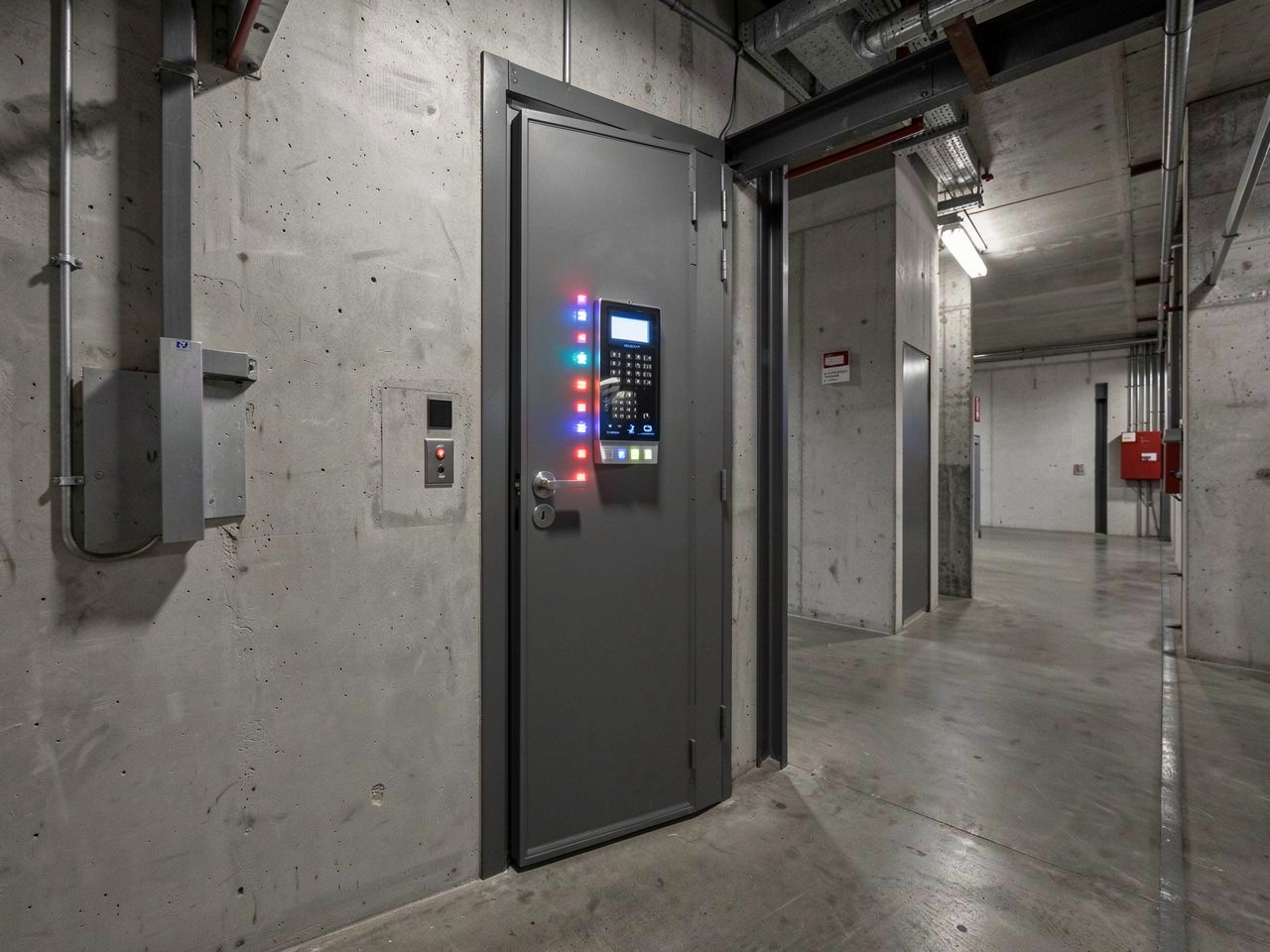
Security requirements in commercial buildings have evolved rapidly. Traditional keys are increasingly being replaced by smarter, more flexible systems that offer better control, monitoring, and safety. At the centre of this shift is modern access control, particularly when digital locks are integrated with commercial fire doors.
For builders, facility managers, and strata operators across Sydney, the challenge is balancing security with life-safety compliance. Fire doors play a critical role in compartmentation and evacuation, so any access control system must work seamlessly without compromising performance. When designed and installed correctly, modern access control enhances both security and compliance.
What Is Modern Access Control?
Modern access control refers to electronic systems that regulate who can enter or exit a space and when. Instead of relying solely on mechanical keys, digital access systems use credentials such as:
- Keypads and PIN codes
- Swipe cards or fobs
- Mobile phone credentials
- Biometric readers
- Centralised access management software
These systems allow administrators to control access in real time, revoke permissions instantly, and monitor usage across multiple doors.
Why Commercial Fire Doors Require Special Consideration
Fire doors are tested and certified as complete systems under Australian standards. Their primary purpose is to contain fire and smoke, protecting escape routes and limiting fire spread. Adding digital locks without proper coordination can create serious compliance issues.
When integrating modern access control with fire doors, systems must ensure:
- Doors remain self-closing
- Latches engage correctly
- Fail-safe operation during power loss
- Compatibility with certified door hardware
This is why early coordination between access control specialists and door manufacturers is essential.
How Digital Locks Work with Fire Doors
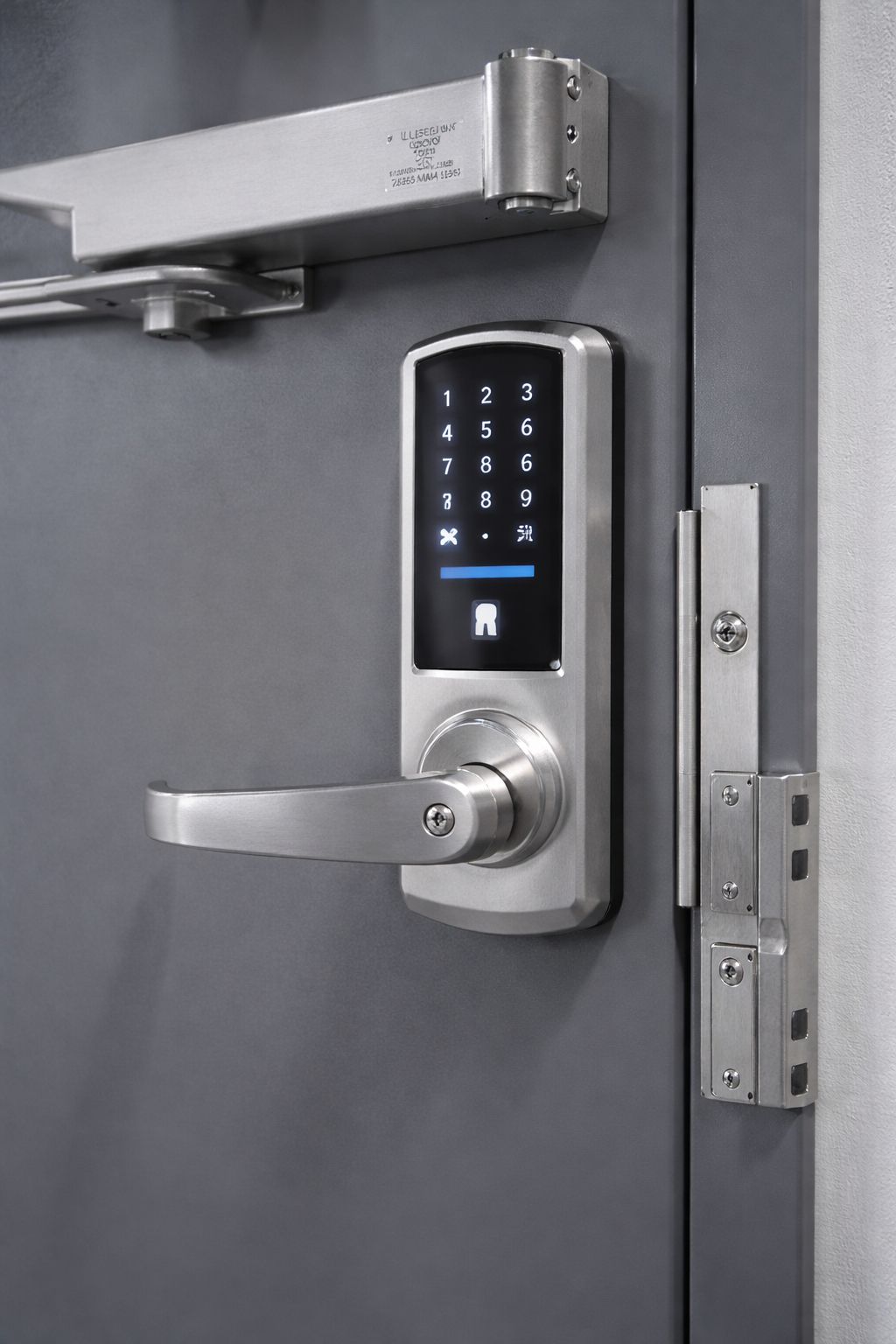
Digital locks used on fire doors are specifically designed to meet compliance requirements. Common configurations include:
Fail-Safe Locking
Locks automatically release when power is lost or when the fire alarm system is triggered, ensuring free egress.
Monitored Locksets
Integrated with building management systems to provide real-time status and reporting.
Credential-Based Entry
Allows controlled access without compromising emergency exit requirements.
When combined with compliant fire doors and certified door hardware, digital locks deliver enhanced safety and security.
Benefits of Modern Access Control in Commercial Buildings
Improved Security Control
Access can be restricted by time, role, or location, reducing unauthorised entry.
Centralised Management
Administrators can manage multiple doors across a site from a single interface.
Audit Trails
Access logs provide accountability and assist with security investigations.
Reduced Key Management
No need to re-key locks when staff change—credentials can be updated instantly.
Scalability
Systems can expand as buildings grow or usage changes.
Integration with Door Hardware and Frames
Successful modern access control depends on correct integration with physical components. Fire-rated door hardware, metal door frames, and accurate door profiling all play a role in system reliability.
Proper integration ensures:
- Digital locks align precisely with latches and frames
- Door closers and seals continue to function correctly
- Fire and acoustic performance is maintained
Poor coordination can lead to doors failing inspections or underperforming in emergencies.
Use Cases Across Sydney
Modern access control systems are widely used across Sydney in:
- Office buildings and commercial towers
- Healthcare and aged care facilities
- Educational campuses
- Industrial and logistics sites
- Mixed-use and strata-managed developments
Each environment has unique requirements, which is why tailored solutions are essential.
Compliance and Certification Considerations
Digital locks used on fire doors must be compatible with the door’s certification. This includes:
- Testing to relevant Australian standards
- Correct installation methods
- Integration with fire alarm systems, where required
Working with experienced suppliers ensures compliance is maintained from design through to installation and ongoing maintenance.
Planning Access Control Early Saves Time and Cost
One of the most common mistakes is treating access control as an afterthought. Retrofitting digital locks after doors are installed often leads to:
- Rework and delays
- Compliance risks
- Increased costs
Early planning allows modern access control to be integrated seamlessly with fire doors, acoustic doors, and architectural finishes.