
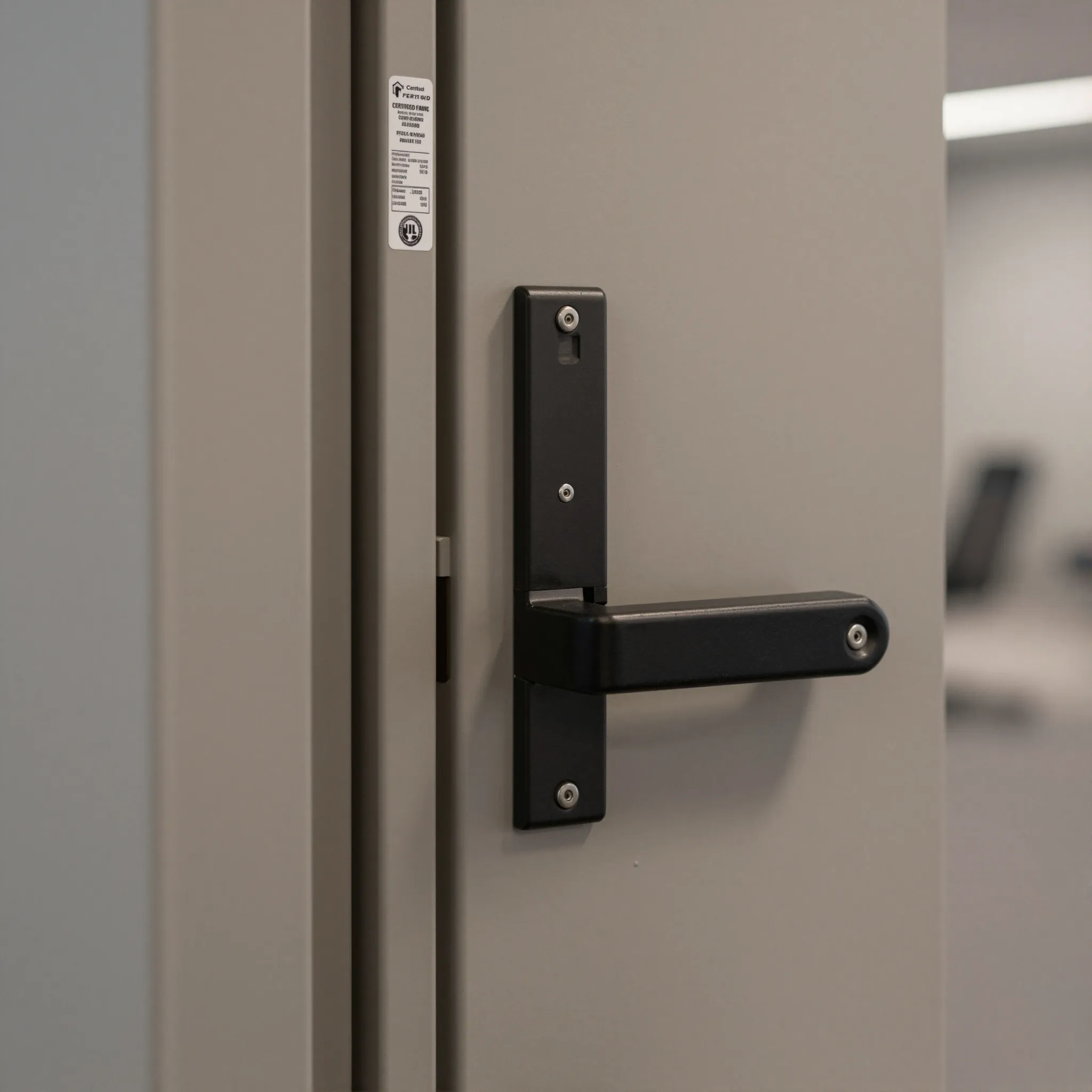
Fire doors are designed to save lives, protect property, and maintain safe evacuation routes during an emergency. But even a correctly manufactured fire door can fail if the wrong components are used. One of the most overlooked causes of non-compliance is fire door hardware that has not been properly tested or certified.
In our experience, many failed inspections of fire-rated doors in Sydney come down to non-approved components: hinges, locks, closers, or seals. We regularly see parts that look right on the door but were never tested or approved for that assembly. It’s an easy mistake to make, but it can compromise the door’s fire performance and leave building owners exposed to serious safety and legal risks.
This article explains why certified hardware matters, the dangers of non-approved components, and how to ensure doorset compliance.
Why Fire Door Hardware Certification Matters
Fire doors are tested as complete systems, not as individual parts. Certification under AS 1905.1 and AS 1530.4 ensures that every component has been tested to perform together during a fire event. When non-certified components are installed, the original test evidence no longer applies.
Certified hardware ensures:
- Structural integrity under extreme heat
- Correct closing and latching behaviour
- Maintained gap tolerances
- Reliable smoke and flame containment
Without proper certification, this chain of performance breaks.
Hardware Components That Must Be Certified
Every item fitted to a fire door can affect its rating. The most critical components include:
Hinges
Hinges must be fire-rated to support the door’s weight and resist deformation during a fire.
Locks & Latches
Locks must remain operational under heat so the door stays closed and latched.
Door Closers
Closers are essential to ensure doors self-close after use, maintaining compartmentation.
Seals
Intumescent and smoke seals expand when exposed to heat, sealing gaps around the door.
Signage & Accessories
Even signage fixings must be compliant to avoid compromising the door leaf.
The Hidden Risks of Non-Certified Hardware
1. Reduced Fire Resistance
Non-certified components can fail early, allowing fire and smoke to spread faster than expected.
2. Failed Compliance Inspections
Building certifiers and fire auditors routinely fail doorsets fitted with non-approved hardware, leading to costly rectification.
3. Increased Liability
If a fire occurs and the doorset is non-compliant, building owners, strata managers, and contractors may face legal consequences.
4. Voided Fire Ratings
Once non-compliant hardware is installed, the door’s fire rating can no longer be relied upon.
5. Insurance Risks
Insurers may deny claims if investigations reveal non-compliant fire safety systems.
How Door Frames and Installation Affect Hardware Performance
Correct hardware selection is only part of compliance. Professional door frame services ensure the frame is installed square, fixed correctly, and compatible with the door and hardware.
Poorly installed frames can cause:
- Excessive gaps
- Misaligned latches
- Doors that do not self-close
- Premature hardware failure
A compliant fire door is always the result of correct components and correct installation.
Why Shortcuts Are Common — and Costly
Uncertified fire door hardware is often cheaper and more readily available. However, the apparent savings disappear quickly when:
- Doors fail inspection
- Hardware needs replacement
- Access to occupied buildings is disrupted
- Project timelines are delayed
Engaging a reputable supplier and installer ensures compliance from the outset.
Best Practice for Fire Door Hardware Compliance
To avoid these risks:
- Specify hardware tested to AS 1905.1
- Use complete doorsets where possible
- Keep certification documentation on file
- Avoid site substitutions without approval
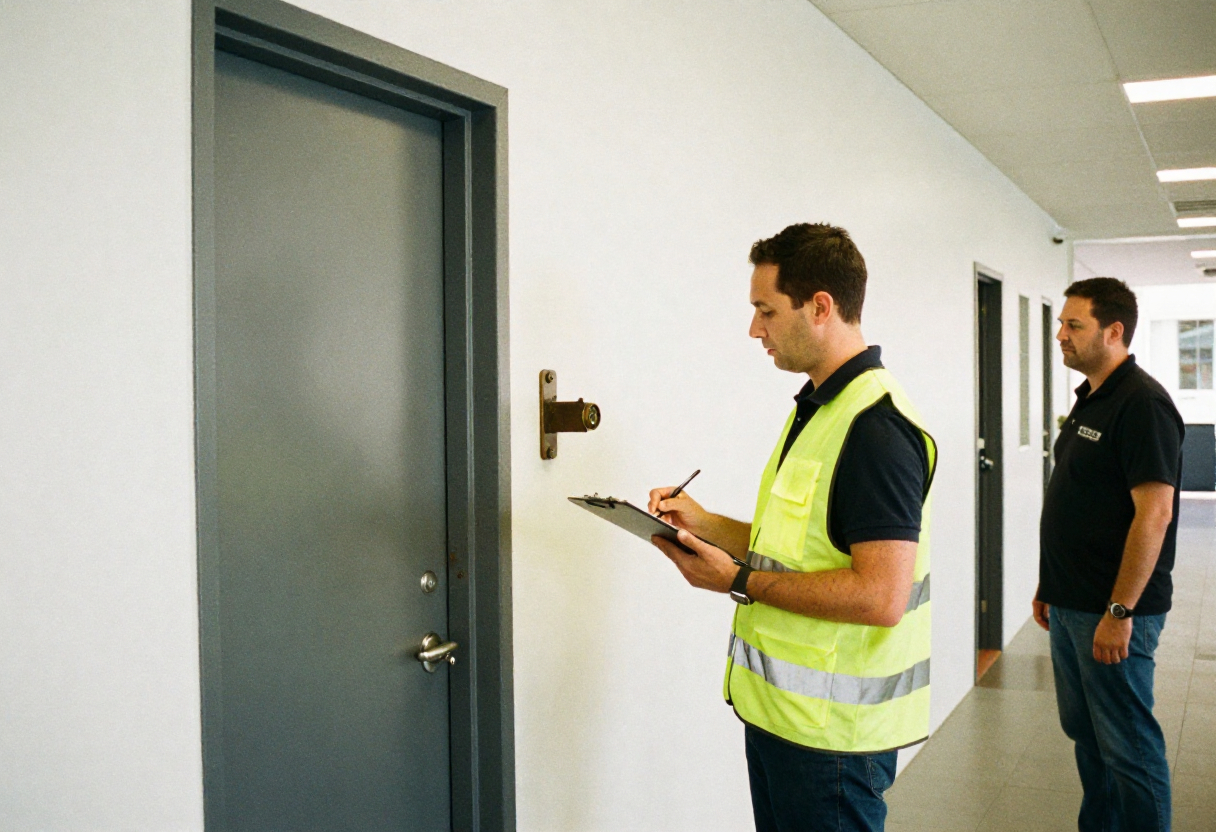
- Schedule regular inspections and maintenance
Working with experienced providers ensures fire-rated doors perform as designed.