
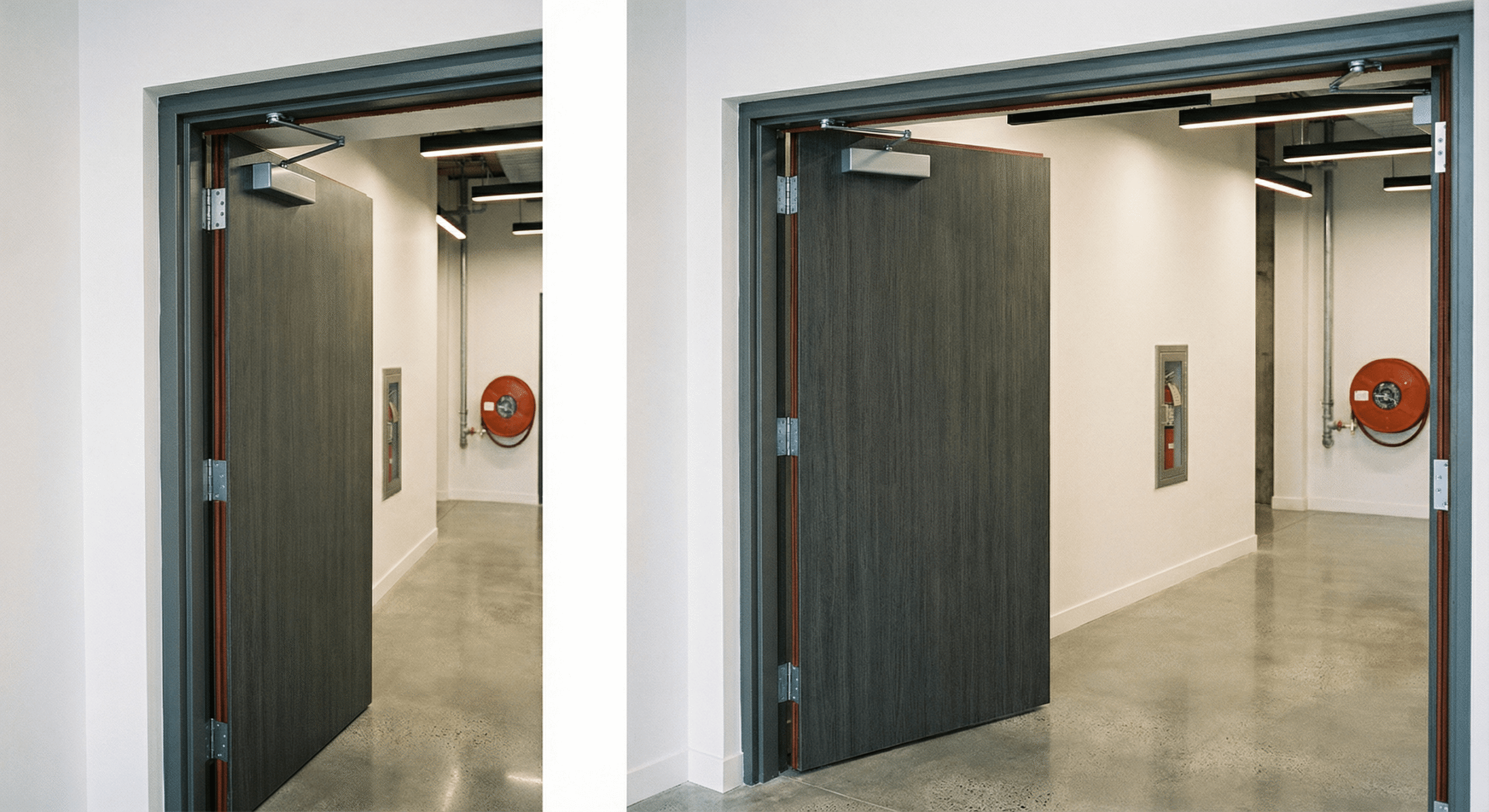
Fire safety is one of the most critical responsibilities in building design, construction, and ongoing maintenance. For builders, facility managers, and strata managers across Sydney, understanding fire door compliance is essential to meeting legal obligations and protecting lives.
AS1905.1 is the Australian Standard that governs the design, manufacture, installation, and maintenance of fire-resistant doorsets. While the standard can appear complex, breaking it down makes compliance far more manageable. This guide explains what AS1905.1 covers, how fire doors should be installed, and where common compliance failures occur.
What Is AS1905.1 and Why It Matters
AS1905.1 is the Australian Standard for fire-resistant doorsets. It works in conjunction with AS1530.4, which governs fire resistance testing. Together, these standards ensure that a fire-rated door performs as tested during a real fire event.
Proper fire door compliance ensures that doors:
- Slow the spread of fire and smoke
- Protect exit paths and stairwells
- Allow occupants time to evacuate
- Limit property damage
Non-compliant doorsets can fail early, placing lives at risk and exposing building owners to serious legal consequences.
What Makes a Fire Door Compliant?
A compliant fire door is not just a door leaf. It is a completely tested doorset that includes:
Fire-Resistant Door Leaf
Constructed with approved fire-resistant cores such as vermiculite or mineral board.
Certified Door Frame
The frame must match the tested configuration and be installed correctly using approved door frame services.
Fire-Rated Hardware
Hinges, locks, closers, latches, and seals must be tested for fire use.
Intumescent & Smoke Seals
These expand under heat to block gaps and restrict smoke movement.
Correct Installation
Clearances must not exceed 3 mm, and fixing methods must align with test evidence.
Any deviation from these requirements can compromise fire door compliance.
Fire-Rated Doors vs. Non-Fire-Rated Doors
It’s important to understand the distinction between fire-resistant and standard doors.
Fire-Rated Door
A fire-rated door has been tested to withstand fire for a specified period (e.g., 60, 90, or 120 minutes). These doors are mandatory in fire-isolated exits, stairwells, corridors, and high-risk areas.
Non Fire Rated Doors
Non-fire-rated doors are not designed to resist fire and must never be used where a fire-resisting barrier is required. Installing them in regulated locations is a serious breach of building codes.
Correct door selection is a fundamental part of fire door compliance.
Installation Requirements Under AS1905.1
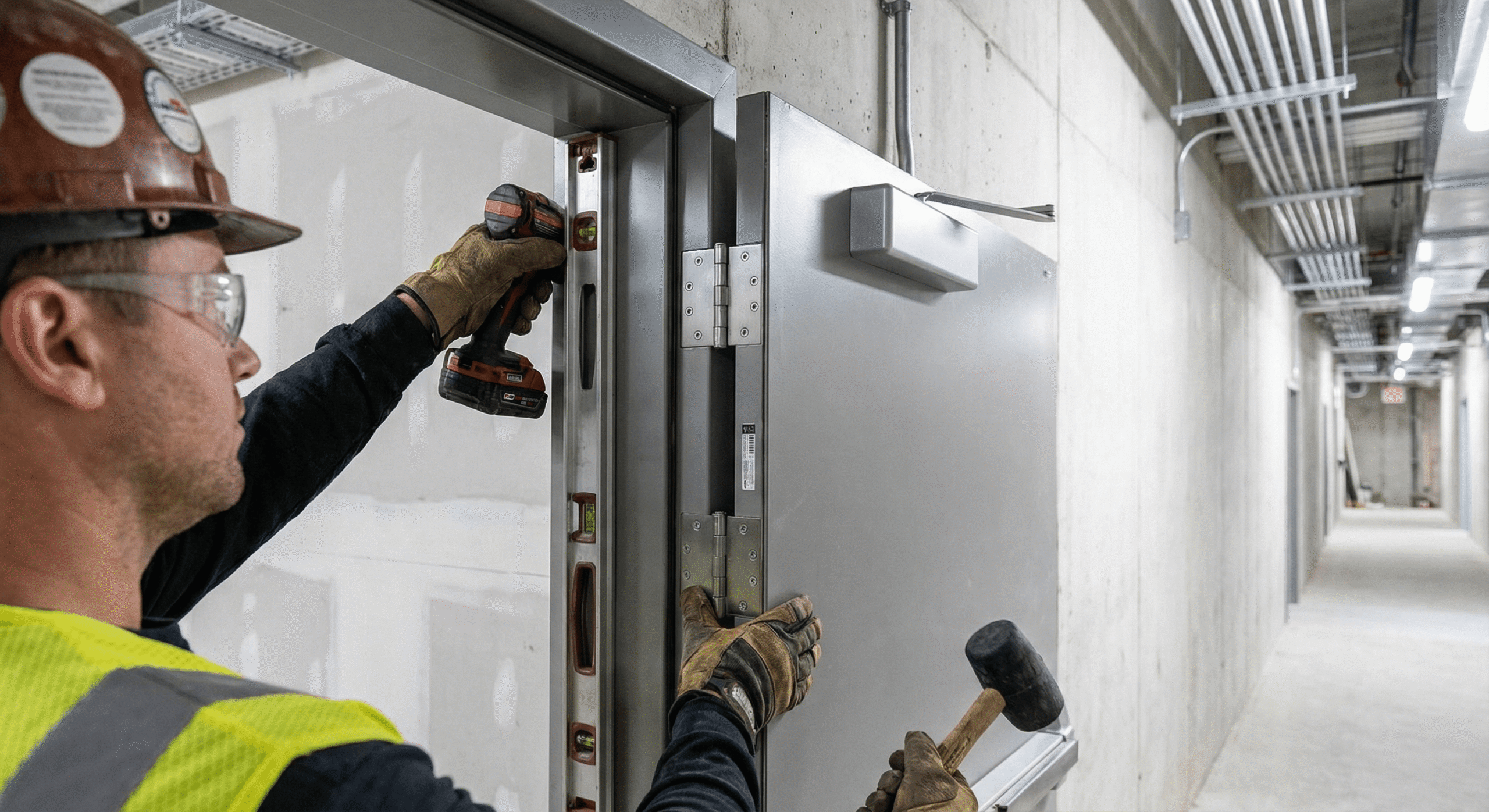
Even a compliant door can fail if installed incorrectly. AS1905.1 outlines strict requirements, including:
- Maximum 3 mm gaps between door and frame
- Approved fixing methods for frames
- Correct hinge count and positioning
- Self-closing devices on required doors
- No unauthorised drilling, trimming, or modification
Professional installers and accurate door frame services play a key role in ensuring compliance from day one.
Ongoing Maintenance and Inspections
Fire door compliance does not end after installation. Doors must be inspected and maintained regularly, especially in commercial and multi-residential buildings.
Common inspection failures include:
- Doors not closing fully
- Damaged seals
- Excessive gaps
- Non-approved hardware replacements
- Doors wedged open
Routine inspections help ensure continued compliance and occupant safety.